
New CTE Research Reinforces the Importance of Understanding Head Impact Exposure in Youth Football
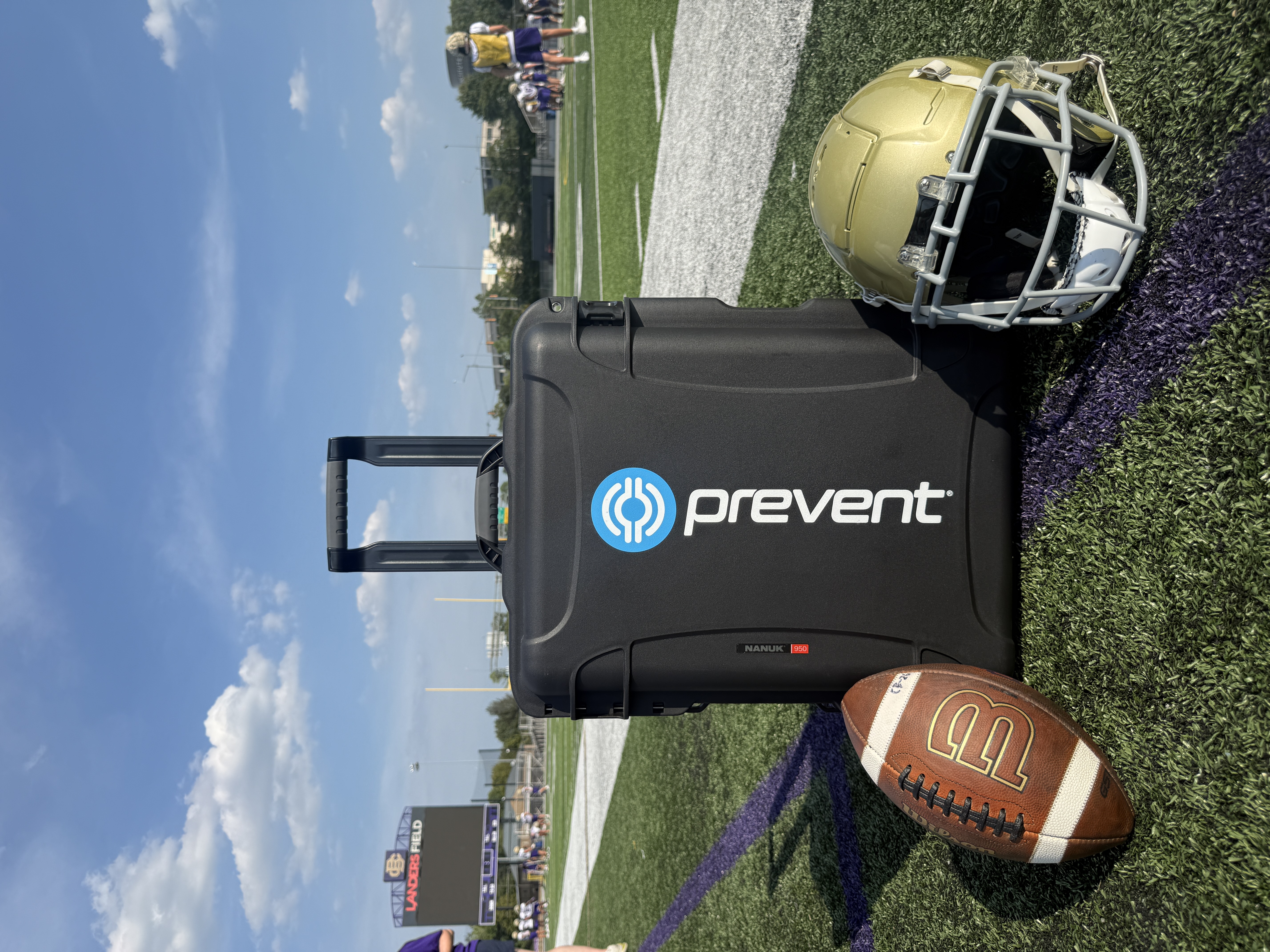
A major new study highlighted by The New York Times this week is bringing renewed attention to chronic traumatic encephalopathy, or CTE, and the long-term effects of repeated head impacts in football.
Researchers examined every former NFL player who died between 2016 and 2021 and found that at least 24.5% had CTE. Because the majority of those players' brains were never examined, researchers believe the true prevalence could be higher.
The finding is significant. But for parents, coaches and youth sports organizations, another conclusion from the research may be even more important:
The biggest predictor of CTE is the cumulative force of head impacts experienced over an athlete's lifetime.
That lifetime exposure doesn't begin in the NFL. For many athletes, it begins years earlier in youth and high school football.
The question for the sport is increasingly becoming: What can we do with that information?
Looking beyond diagnosed concussions
For years, much of the conversation around football and brain health has understandably focused on concussions.
Recognizing symptoms, removing an athlete from play and ensuring an athlete is appropriately evaluated remain critically important.
But CTE research is also drawing attention to a broader issue: repetitive head impact exposure.
Not every head impact causes a concussion. Many don't produce noticeable symptoms at all. Yet researchers are increasingly studying how the cumulative force of those impacts over months, seasons and years may contribute to long-term neurological risk.
That creates a challenge for coaches, parents and medical professionals.
Historically, there has been very little objective information available to tell them how much head impact exposure an individual athlete is actually experiencing.
Some youth and high school football programs are beginning to change that.
At Aliquippa High School, head impacts are becoming measurable
At Aliquippa High School in Pennsylvania, one of the region's most successful football programs, players are participating in a Penn State University research project designed to better understand head impacts in football.
The research, funded by the Chuck Noll Foundation, uses Prevent Biometrics instrumented mouthguards to objectively measure the forces players experience on the field.
The mouthguards contain accelerometers, gyroscopes and other sensors that capture head motion when an impact occurs. That allows researchers to move beyond estimating exposure and begin quantifying what individual athletes actually experience.
The results from Aliquippa illustrate why that matters.
Two players monitored during last season averaged 162 recorded head impacts over the course of the season, ranging from smaller impacts to more significant events.
Researchers found that the head impact exposure measured at Aliquippa was comparable to what they observed in Division I college football.
One possible explanation is particularly relevant to youth and high school football: many Aliquippa players play on both offense and defense.
That means more snaps, and potentially many more opportunities for head impacts.
For a sport trying to understand cumulative exposure, information like this provides an entirely different level of visibility.
Data can lead to better questions
The value of measuring head impacts isn't simply producing a bigger dataset.
It's what coaches, athletic trainers and researchers can learn from it.
Aliquippa athletic trainer Mike McGarvey told CBS Pittsburgh that the program is already looking at impact patterns to help identify potential technique issues.
If an athlete consistently experiences impacts to the front of the head, for example, that pattern could raise a question about whether the athlete is lowering his head during contact.
That's a fundamentally different approach to player safety.
Instead of only responding after an athlete reports symptoms, objective data can help programs begin looking for patterns in how, when and how often head impacts are occurring.
Over time, that can help inform questions such as:
- Are certain practice periods producing disproportionately high head impact exposure?
- Are some athletes experiencing substantially more contact than others?
- Are players who participate on both offense and defense accumulating significantly more exposure?
- Are there recurring impact locations that could point to technique issues?
- Can practice structure, contact periods or coaching techniques be adjusted to reduce unnecessary impacts?
The mouthguard doesn't make those decisions.
It provides objective information that previously wasn't available to help coaches, researchers and medical professionals make them.
Treating head impacts more like athlete workload
Sports already manage many forms of athlete exposure.
Baseball monitors pitch counts. Strength staffs monitor training loads. Coaches manage practice repetitions and playing time.
Head impacts have historically been different.
A coach may know that one athlete takes more contact than another, but without objective measurement, it can be difficult to understand how large that difference actually is—or how it accumulates over an entire season.
Instrumented mouthguards offer a way to begin treating head impact exposure as another form of athlete workload.
That doesn't mean there is a universally accepted number of impacts that makes football "safe." There isn't.
It means programs can begin replacing assumptions with information.
And as researchers learn more about the relationship between cumulative head impact exposure and long-term brain health, having accurate exposure data becomes increasingly valuable.
Why the youth level matters
The latest CTE research makes this conversation particularly relevant for youth sports.
An NFL player's cumulative exposure doesn't begin when he reaches professional football. It can represent years of impacts accumulated through youth, high school, college and professional competition.
That does not mean that a young athlete who plays football will develop CTE. Scientists still have important questions to answer about why some athletes develop the disease and others do not.
But the research increasingly supports a straightforward principle:
Reducing unnecessary head impact exposure is a worthwhile goal at every level of the sport.
Youth organizations have a unique opportunity because they can begin thinking about exposure before years of contact have accumulated.
That could mean reducing unnecessary contact during practice. It could mean examining how many snaps athletes play. It could mean teaching different techniques. And increasingly, it can mean objectively measuring exposure so those decisions are based on data rather than estimates.
Measurement isn't prevention. It's information that can drive action.
No mouthguard, helmet or sensor can claim to prevent CTE.
And Prevent's instrumented mouthguard does not diagnose CTE or concussion.
Its role is measurement.
The system objectively measures the linear and rotational forces associated with head impacts, identifies when significant impacts occur and creates a record of an athlete's exposure over time.
That information can help alert appropriate personnel when an impact warrants closer evaluation. It can also provide coaches, athletic trainers and researchers with a broader picture of what athletes are experiencing across practices, games and seasons.
At Aliquippa, we're beginning to see what that can look like at the high school level: researchers studying exposure, athletic trainers identifying patterns and coaches gaining information that simply wasn't available to previous generations.
Better information can help football evolve
Football provides young athletes with experiences that extend far beyond the field—teamwork, discipline, competition, friendships and community.
Acknowledging those benefits doesn't require ignoring the risks of the sport.
The latest CTE research should instead reinforce the importance of continuing to find ways to make football better and more informed.
For decades, we simply didn't know how many head impacts an athlete experienced during a season, how significant those impacts were or how exposure differed from one athlete to another.
Today, we can measure it.
That doesn't solve the CTE problem.
But understanding the problem more clearly is an important place to start.