
What head acceleration exposure actually tells you
Ask most people how dangerous a hit was and they'll describe one moment - the collision everyone saw, the player slow to get up. But the science of head safety has moved past the single big hit. The number that increasingly matters is head acceleration exposure, or HAE: the accumulated load an athlete's head absorbs across a session, a week, a season.
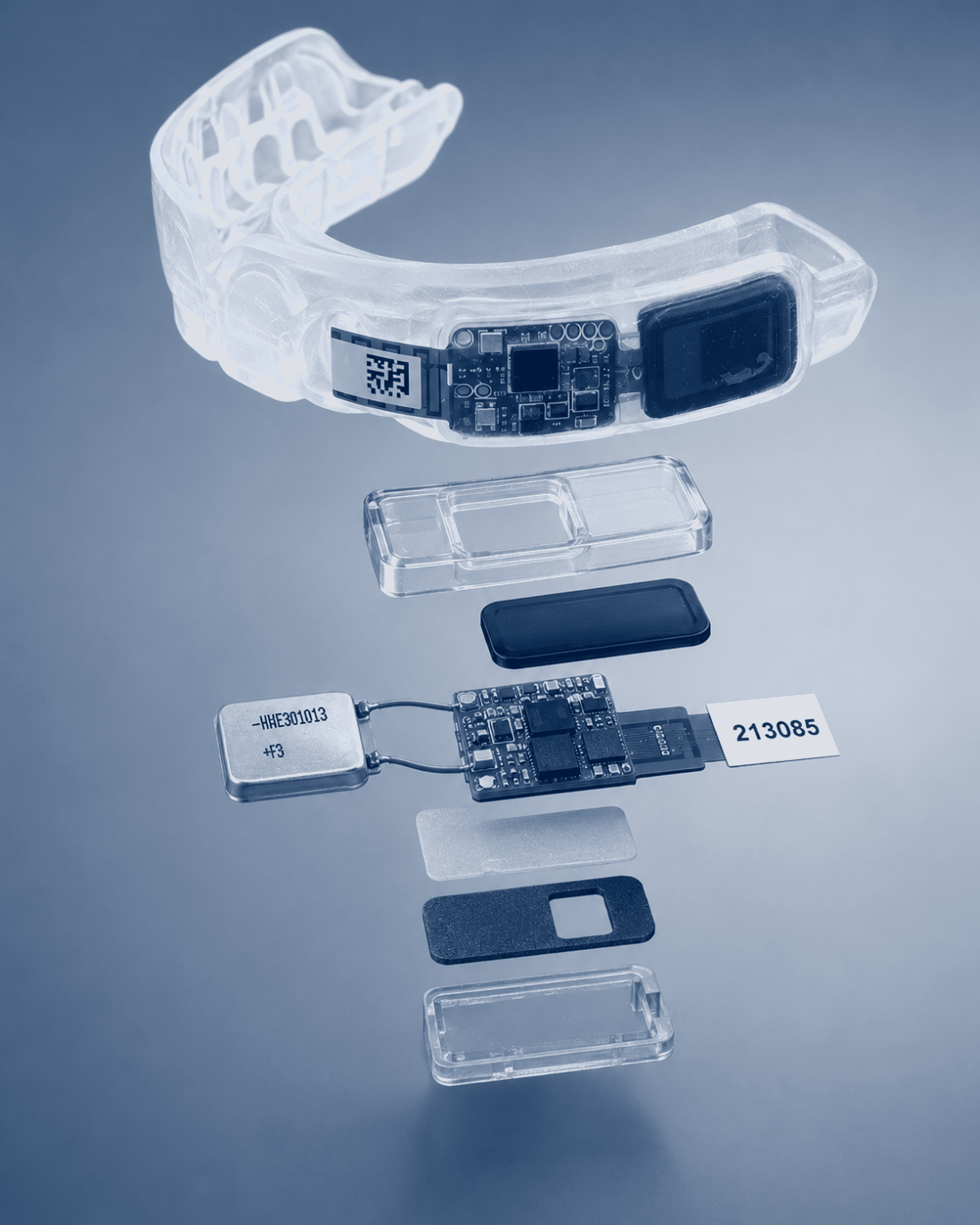
Prevent's Impact Monitor Mouthguard sits flush against the upper teeth - the most rigid coupling to the skull available - and measures every impact at the source. The result isn't a single dramatic figure. It's a continuous, defensible record of exposure.
Beyond the single big hit
Two athletes can finish a match with the same number of "big" impacts and carry completely different risk. One absorbed those hits cleanly; the other took dozens of smaller, sub-symptomatic knocks in between. Counting only the headline collisions misses most of the story. HAE captures the full distribution - peak linear acceleration, peak angular acceleration, location, direction and frequency - and rolls it into one trend you can actually track.
Reading the number
A readiness figure like "412 J of HAE this week" only means something in context. Is it higher than this athlete's own baseline? Is it climbing across consecutive sessions? Is one position or one drill driving a disproportionate share? Because the data is measured rather than estimated, those questions have answers a coach can defend in a conversation with a parent, a physician or a governing body.
What teams do with it
Exposure data changes decisions before they become incidents. Coaches tune contact volume in training, rotate load away from athletes trending high, and refine tackle technique where the numbers point. Medical staff get an objective input into the head injury assessment process - not a replacement for clinical judgment, but evidence that supports it. The tone is never alarm. It's clarity: the invisible, made measurable.
That's the shift HAE represents: away from reacting to the hits we happened to see, toward managing the exposure we can now actually measure.